Multi-Factor Authentication
This project improved security on Wayfair's business-to-business platform, reducing the risk of theft and helping bring larger partners on board to sell on Wayfair.
The Challenge
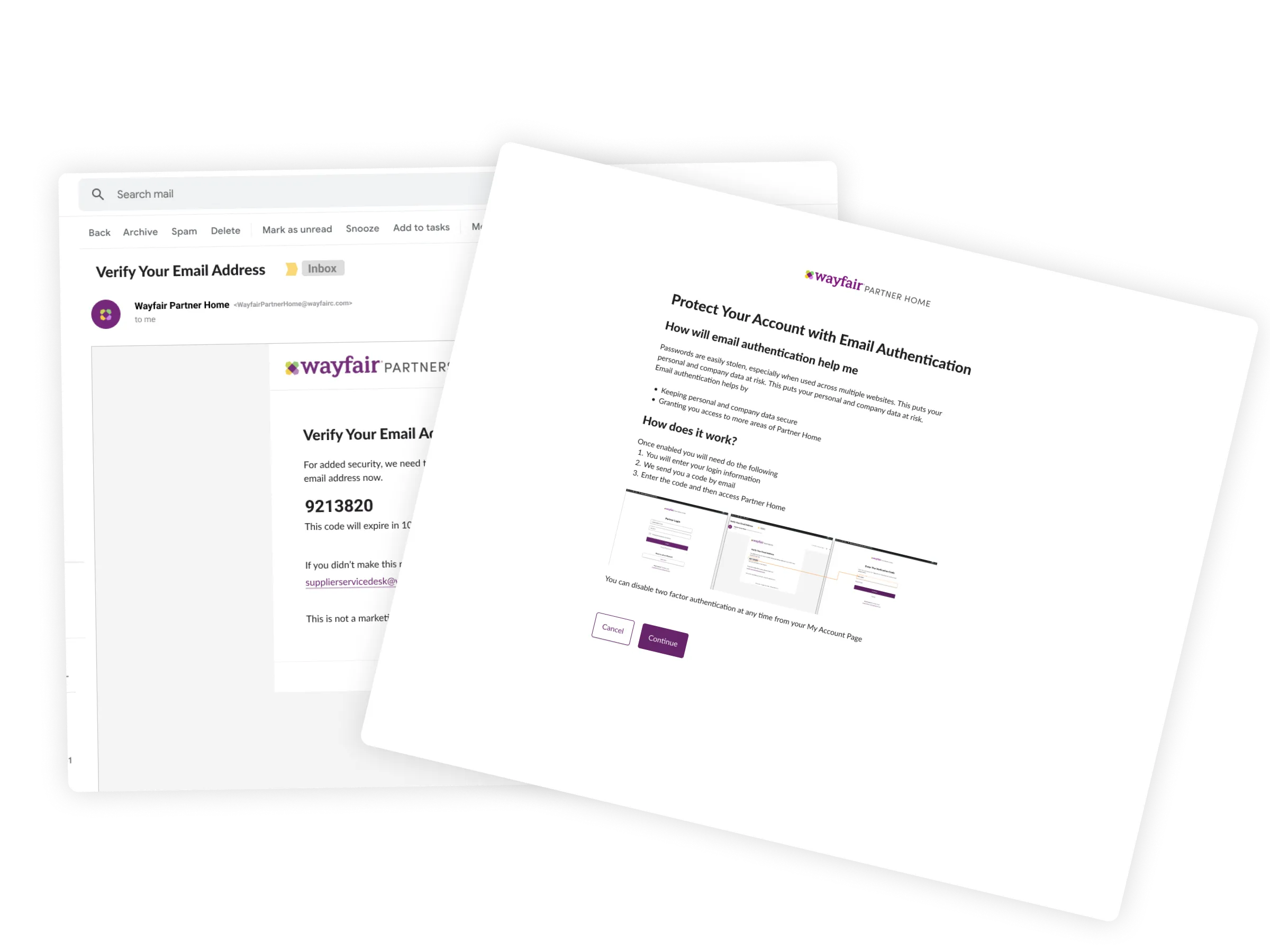
Wayfair's B2B platform didn't follow security best practices. That kept some suppliers from partnering with Wayfair and put Wayfair at risk of legal action.
- Security prevents partnership. Partners named security as a reason for not joining Wayfair
- Potential legal issues. Because MFA wasn't properly in place
Competitive Research
We researched Wayfair’s B2B competitors to see where Wayfair stood in the market, how competitors had solved this problem, and what the best practices were.
Because B2B platforms are private, we gathered research from public sources such as YouTube videos and help centers.
User Flows
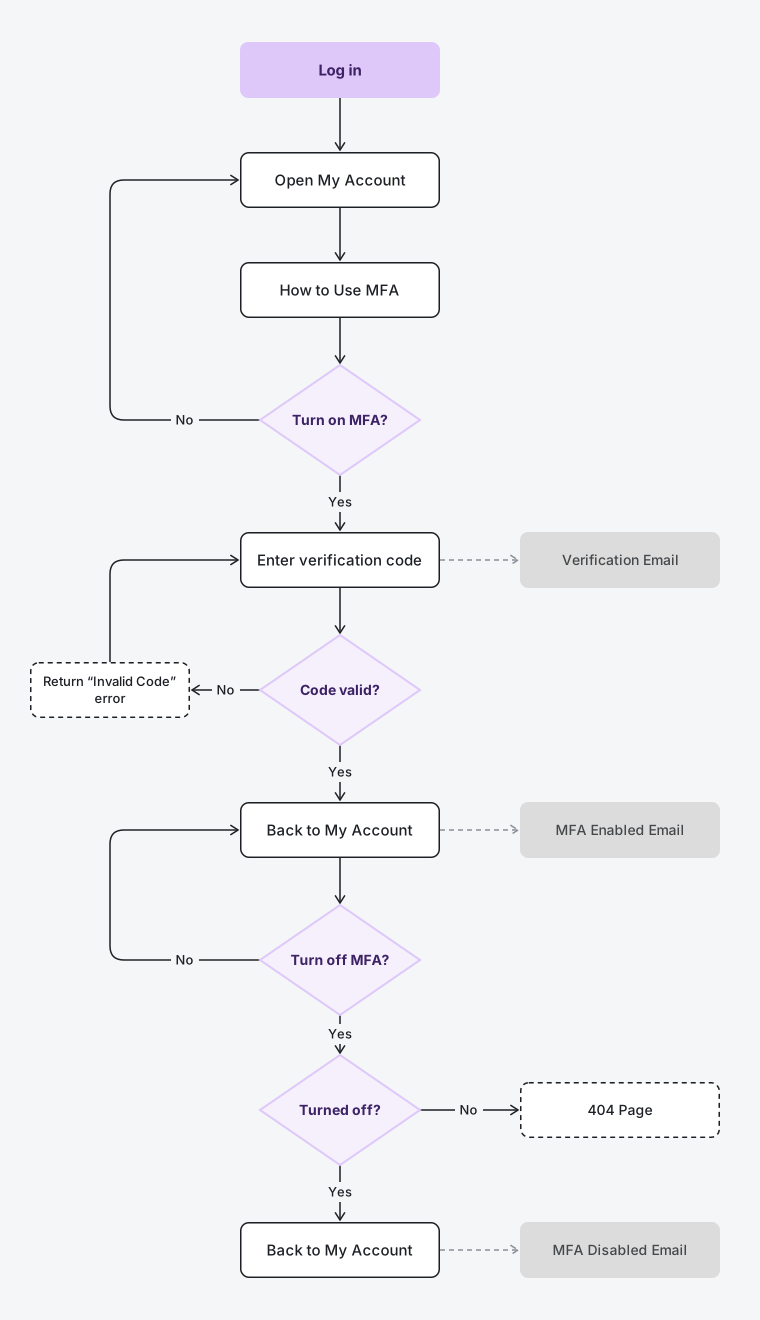
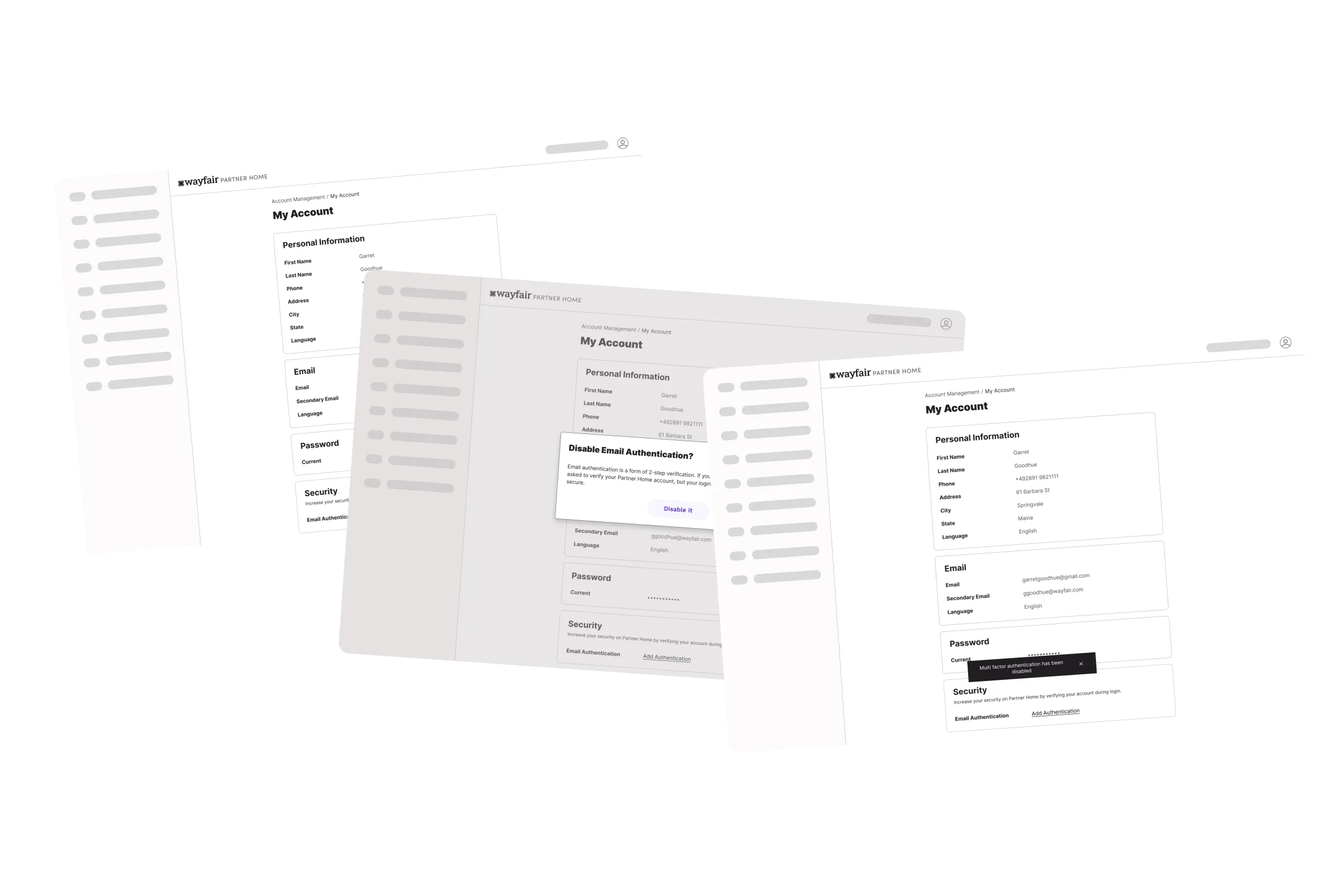
Once the problem was defined, I mapped the overall experience into user flows and wireframes.
Research
We interviewed suppliers to understand their views on security, the cybersecurity issues they’d faced, how they preferred to authenticate, and possible solutions.
“Email would work for all of our team members. Not everyone has a work phone.”
“We have had attacks where perpetrator pose as my boss sending me an email.”
Final Design
Results
- High adoption rate. Combining targeted marketing copy and educational resource articles successfully drove voluntary MFA enrollment without requiring immediate enforcement.
- Broad framework impact. Enabled other product teams across the organization to embed standardized MFA verification into their sensitive action flows.
- Research drove direction. Validated the necessity of user research in enterprise security, highlighting that security adoption relies as much on educational marketing and contextual flexibility as it does on system policy.